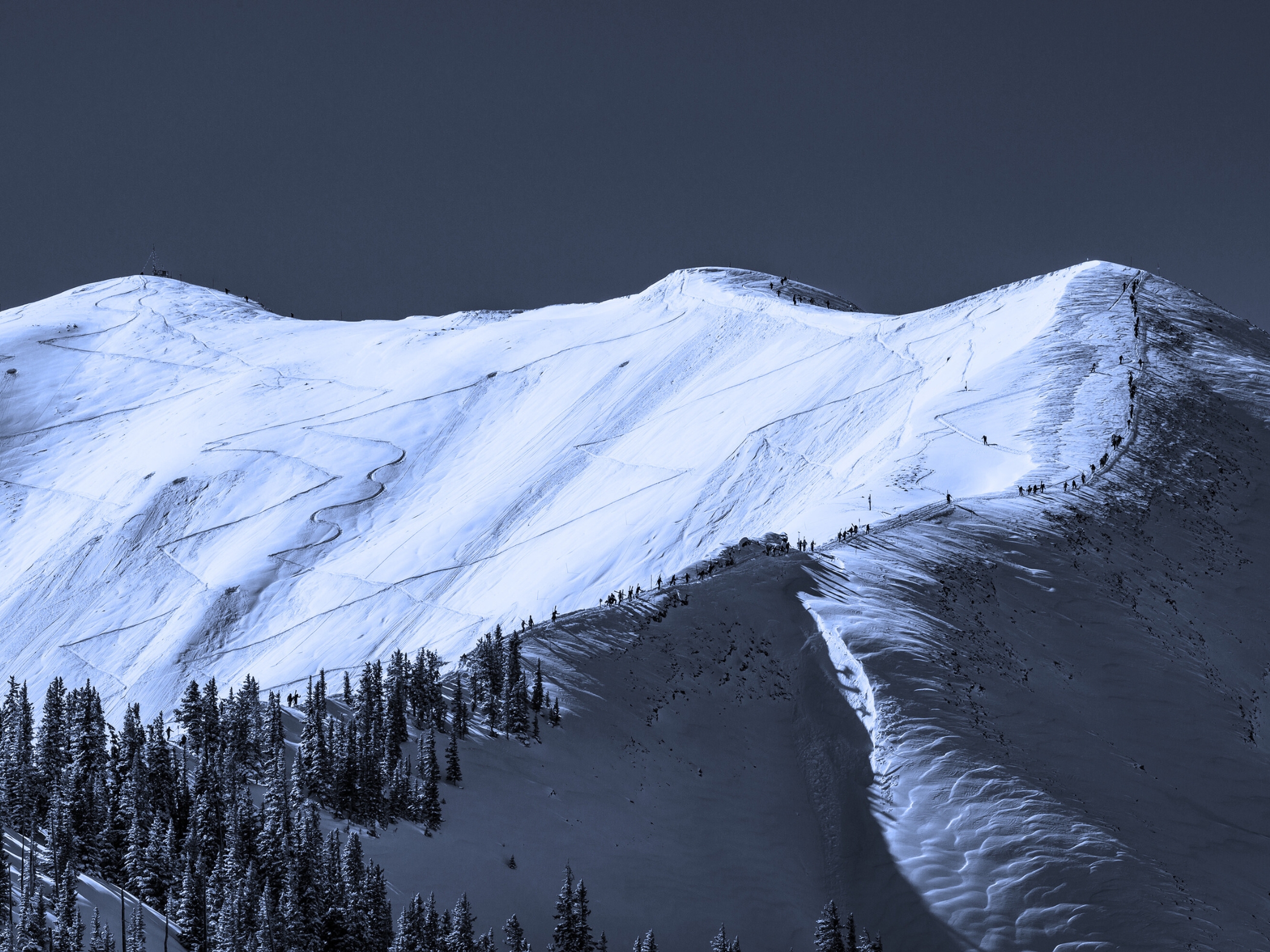
Avalanche danger is at Level 5 (extreme danger) across parts of Savoie, France. The highest rating on the European scale.
Resultingly the following resorts have been affected…
- La Plagne is fully closed.
- Les Arcs is closed for skiing, with only limited lifts running for pedestrian village access between Arc 1600, 1800 and 2000.
- The Paradiski area is effectively shut.
- Tignes is also at Level 5, where lift openings are expected to be extremely limited.
- Val d’Isère and Morzine have warned of major delays and restricted terrain due to avalanche control work.
The instability extends beyond France. Switzerland has recorded Level 4 (High) danger, with very large avalanches possible and transport routes at risk. Parts of the Bernese Oberland through to Graubünden remain at Level 3 (Considerable).
The danger is expected to persist until Monday 16th February at the earliest.
What Level 5 means
The snowpack is extremely unstable across many aspects and elevations. Numerous very large to extremely large natural avalanches are expected. Slides can, and are expected to release without any human trigger reaching valley floors, roads, lift infrastructure and settlements.
Control work can be ineffective or simply too dangerous to carry out. Resort operations are therefore severely impaired, often resulting in full mountain closures to mitigate the risk to life.
Backcountry travel should not be attempted.
The cause of this risk is a forecasted 1.5 metres of snow. Despite primarily covering the Western Alps, strong winds have and are actively redistributing, loading leeward slopes and building fragile slabs.
Flooding has already been reported in some Alpine valleys, with roads blocked or cut off.
So far this winter, 66 avalanche fatalities have been recorded across the Alps, against a seasonal average of around 100. In Italy, 10 deaths were reported in the past week alone.

